
- Residential multifamily category
- 2–4 units
- Conventional multifamily starts at
- 5 units
- Published minimum coverage
- 1.25x
Within the one-to-four-unit program boundary [1]
Fannie Mae program eligibility [2]
Fannie Mae conventional multifamily DSCR; not universal [2]
Data: 2026 FHFA limits and lender/agency guidance checked October 22, 2026; MLS market context through October 22, 2026, extracted October 23.
Two units, four units, or five: why the line matters
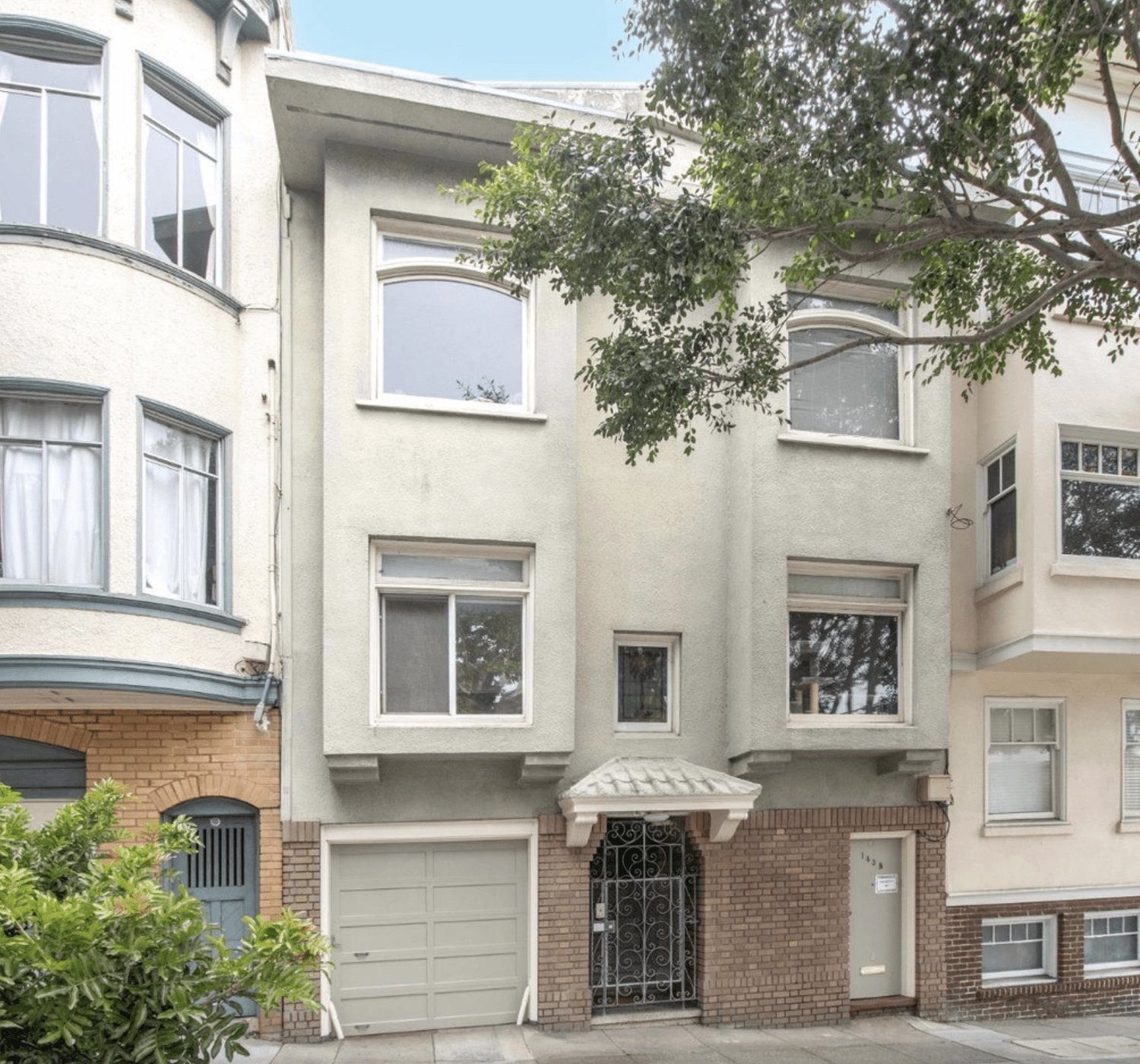
In San Francisco, a duplex and a five-unit apartment building can look similar from the sidewalk. They can have very different financing paths. Fannie Mae’s single-family rules cover eligible one-to-four-unit residential properties. Its conventional multifamily program starts at five units and targets existing, stabilized buildings. These are program boundaries, not a claim that every lender uses identical rules. [1, 2]
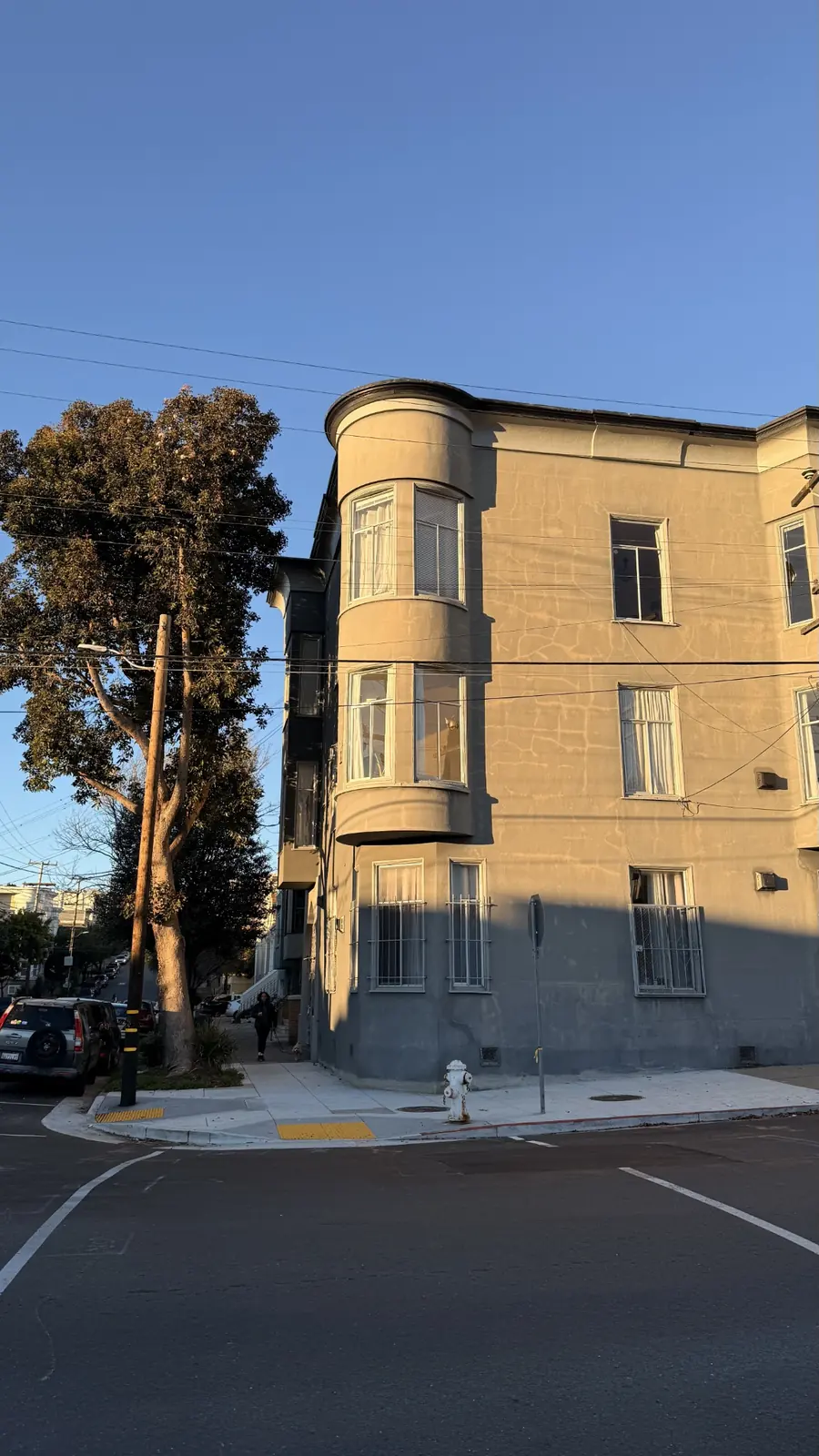
This guide compares buying an entire building. A loan on one condominium or a tenancy-in-common interest is a different collateral question. Confirm the lender’s accepted unit count and property classification before comparing term sheets. A high purchase price alone does not convert a four-unit property into a five-plus-unit multifamily loan.
| Question | Residential route: 2–4 units | Multifamily route: 5+ units |
|---|---|---|
| What drives qualification? | Borrower income, debts, credit, assets, and eligible rental income. [5, 6] | Property cash flow and debt coverage, plus borrower and property review. [2] |
| Will you live there? | Primary-residence and investment-property requirements differ. [4] | Living in one apartment does not make a 5+ unit building eligible for Fannie Mae single-family financing. [1, 2] |
| What caps the loan? | Program LTV, conforming or jumbo limits, appraisal, and borrower qualification. [1, 3, 4, 5] | Property-level loan sizing; compare the income-supported amount with the LTV ceiling. [2] |
| Who takes title? | Fannie Mae generally requires individual borrowers, with specified exceptions. [8] | Confirm the lender’s single-asset borrowing-entity and guarantor requirements. [2] |
| What should you compare? | Rate, term, mortgage insurance if applicable, reserves, and total cash to close. | Rate, maturity, amortization, fees, reserves, prepayment, and guarantees. |
The 2–4-unit and 5+-unit purchase markets differ
| MLS building size | Closed sales | Median price | Median price / unit | Median reported cap rate | Sales reporting a cap rate | Median days on market | Median sale / final list |
|---|---|---|---|---|---|---|---|
| 2-4 units | 368 | $2,055,000 | $770,000 | 4.63% | 194 | 16 | 106.8% |
| 5+ units | 134 | $2,830,000 | $365,000 | 5.68% | 121 | 43 | 97.1% |
TurboHome MLS analysis [M]. San Francisco closed sales through October 22, 2026. 2026 YTD is January 1–October 22; earlier years are full calendar years. Different sale samples, not matched-property appreciation. Cap rates are listing-reported for the stated subset, with values restricted to 0%–20%. They are not independently underwritten operating yields. The price-per-unit median is its own statistic, not median building price divided by an assumed unit count.
TurboHome MLS analysis [M]. San Francisco closed sales through October 22, 2026. 2026 YTD is January 1–October 22; earlier years are full calendar years. Different sale samples, not matched-property appreciation.
The 2026 YTD median price per unit is $770,000 for 2–4-unit income listings and $365,000 for 5+-unit listings. That gap is not an automatic conversion profit: unit size, tenancy, condition, legal status, operating costs, financing and location differ. The MLS size classification must also be checked against the lender’s accepted legal unit count. [M]
For 2–4-unit income listings, the median sale-to-final-list ratio is 106.8% in 2026 YTD, compared with 100.0% for full-year 2025. The listing-reported cap-rate median is 4.63% versus 5.19%, based on 194 and 211 reporting sales respectively. For 5+-unit listings, the 2026 YTD median reported cap rate is 5.68% across 121 reporting sales. Different sale mixes and reporting subsets can change these figures; they do not measure same-building yield compression or rent growth. [M]
San Francisco’s 2026 conforming limits are loan amounts
FHFA’s 2026 county file lists the following ceilings for San Francisco County: $1,599,375 for two units, $1,933,200 for three, and $2,402,625 for four. These cap the conforming loan balance, not the price of the building. A balance within the limit still needs to satisfy the relevant mortgage program. Above it, a buyer may need jumbo or portfolio financing. [3]
Source [3]: FHFA, 2026 county file, San Francisco County (06/075). Not purchase-price limits, down-payment quotes, or limits for five-plus-unit commercial loans. Use Data view for exact amounts.
For example, a $2.5 million four-unit purchase with a $1.8 million loan is below the county’s $2,402,625 four-unit ceiling. That does not establish eligibility: occupancy, LTV, documentation, and the borrower’s finances still have to work. The county limit is one gate, not an approval.
Owner occupancy can change the residential leverage rules
Fannie Mae’s standard Desktop Underwriter purchase matrix lists up to 95% LTV for eligible two-to-four-unit principal residences, but high-balance exceptions are crucial in San Francisco. The matrix’s high-balance note caps two-unit properties at 85% and three-to-four-unit properties at 75%. Standard two-to-four-unit investment purchases are listed at 75%. Other program conditions and lender overlays apply. Do not read “5% down” as a blanket promise for a San Francisco fourplex. [4]
Residential qualification: personal income still matters
Debt-to-income ratio compares qualifying monthly debt obligations with qualifying monthly income. Fannie Mae’s published maximum is generally 36% for manual underwriting, potentially 45% when specified conditions are met, and 50% for Desktop Underwriter casefiles. Those are program limits, not targets or guarantees that a lender will approve a particular applicant. [5]
The purchase rules also do not simply count every dollar of advertised rent. Fannie Mae’s September 2026 subject-property guidance applies a 75% factor to monthly gross rent, then subtracts the property’s qualifying housing payment. Positive adjusted income may be treated differently depending on rental-management experience; a negative amount affects DTI. Lenders must document rents and applicable eligibility conditions. This is a qualifying calculation, not the building’s actual profit-and-loss statement. [6]
Commercial qualification: the income can cap your loan
Loan-to-value compares debt with property value. Debt-service coverage ratio, or DSCR, compares the lender’s underwritten income measure with annual debt service. A stronger appraisal does not automatically solve a shortfall in debt coverage. Ask the lender which expenses, reserves, vacancy assumptions, and debt payment it uses in the calculation.
One published benchmark is Fannie Mae’s conventional multifamily term sheet: maximum 80% LTV and minimum 1.25x DSCR. These figures describe that program, not every bank, bridge lender, or commercial loan. Even under those benchmarks, income may support far less than 80% leverage. [2]
Illustration: $3 million value, 80% LTV ceiling, 1.25x DSCR, 6.50% rate, 30-year amortization. Income is the hypothetical annual amount used for the coverage test. Borrowing is capped at the lower of income-supported debt and $2.4 million. No interest-only period, fees, reserves, or balloon payment is modeled.
A 30-year amortization is not a 30-year maturity
Amortization describes the schedule used to calculate payments. Maturity is when the remaining balance must be repaid. A loan can have payments calculated over 30 years and still mature much earlier. Read both terms, then ask how a sale, refinance, or extension would work at maturity.
Fannie Mae’s conventional multifamily term sheet offers loan terms of 5–30 years and amortization up to 30 years. It also specifies yield-maintenance or declining prepayment premiums depending on the rate structure. Compare the actual proposed documents rather than assuming commercial debt always has a short balloon or is freely prepayable. Ask separately about recourse and guaranty carve-outs. [2]
“Residential” does not always mean consumer-purpose credit
Property type and legal loan purpose are different classifications. CFPB’s Regulation Z commentary treats acquisition credit for a non-owner-occupied rental as business-purpose regardless of unit count. For owner-occupied rental acquisitions, more than two housing units also triggers its stated business-purpose rule. So a four-unit loan can be in a residential mortgage program without being consumer-purpose credit under that rule. Ask your lender to identify the classification and applicable disclosures. [7]
The San Francisco diligence that belongs beside the loan quote
For units covered by San Francisco’s rent rules, lawful rents may differ from a seller’s projected market rents. The city’s rent-limitation framework includes conditions and exceptions; a lender’s pro forma is not a legal determination. Review leases, rent histories, and applicable restrictions with an appropriate local adviser before relying on an increase. [9]
- Confirm the building’s legal unit count and the collateral being financed. Resolve discrepancies among marketing materials, records, and the appraisal early.
- Give lenders the same rent roll, leases, operating history, vacancy assumptions, and renovation scope so their proposals can be compared.
- Request a property-specific insurance quote and a realistic maintenance and capital-work budget rather than relying on the seller’s prior costs.
- Ask how occupied, vacant, or owner-occupied apartments are treated in underwriting. Do not assume a proposed move-in or future rent change is automatic.
- Compare cash to close, cash reserves after closing, prepayment costs, maturity, and guarantees alongside the interest rate.
Questions to take into the lender conversation
Common questions
Does a $3 million fourplex automatically need a commercial multifamily loan?
No. Price alone does not change the unit-count boundary. The required loan balance, occupancy, leverage, collateral, and borrower qualification determine whether a conforming, jumbo, portfolio, or other program fits. [1, 3, 4]
Can I use the same residential program for a five-unit building if I live in one unit?
Fannie Mae single-family eligibility stops at four units. Occupying an apartment does not change that program boundary. Ask a lender about appropriate five-plus-unit financing. [1, 2]
Is 20% down enough for a commercial multifamily purchase?
Not necessarily. An 80% LTV ceiling is only one constraint. The worked example shows how a debt-coverage test can require much more purchase equity. Fees, reserves, and other underwriting conditions may add to the cash requirement. [2]
Should I form an LLC before applying?
Confirm the financing and title requirements first. Fannie Mae generally lends to individuals with specific exceptions, while commercial programs have their own entity requirements. Coordinate the lender, escrow, and legal advice before fixing the ownership structure. [2, 8]
Are the sample rates current lender quotes?
No. The 6.50% figure is used only to isolate the math in the worked example. Request dated, property-specific terms from lenders before making a financing decision.
Methodology
Regulatory and agency figures are dated snapshots, not lender commitments. FHFA values were checked against the San Francisco County row (state 06, county 075) in the 2026 official CSV. LTV references use the August 5, 2026 Fannie Mae matrix and its high-balance footnote. For the loan-size illustration, monthly payment factor = r ÷ [1 − (1+r)^−360], where r = 0.065 ÷ 12. Annual debt service capacity = annual coverage-test income ÷ 1.25. Income-supported principal = annual debt service capacity ÷ (12 × monthly payment factor). Final modeled borrowing is the lower of this amount and 80% of $3 million. Purchase equity = $3 million less modeled borrowing, excluding other costs. Displayed dollars are rounded; formulas use unrounded values. No live rates, forecast returns, or actual operating results are presented. MLS context comes from the supplied October 23 TurboHome pack, with 2026 YTD ending October 22. Building-size sales and cap-rate samples are separate; reported cap rates are not lender-underwritten NOI, DSCR, financing terms or legal-unit verification. The DSCR example remains hypothetical and is not fitted to these market medians.
Sources
- [1] Fannie Mae · General Property Eligibility ↗
- [2] Fannie Mae Multifamily · Conventional Properties Term Sheet ↗
- [3] FHFA · 2026 county conforming loan limits (San Francisco County, FIPS 06075) ↗
- [4] Fannie Mae · Eligibility Matrix, August 5, 2026 (including high-balance notes) ↗
- [5] Fannie Mae · Debt-to-Income Ratios ↗
- [6] Fannie Mae · Rental Income from the Subject Property, September 2, 2026 ↗
- [7] CFPB · Regulation Z §1026.3, official interpretations 3(a)-4 and 3(a)-5 ↗
- [8] Fannie Mae · General Borrower Eligibility Requirements ↗
- [9] San Francisco Administrative Code §37.3 · Rent Limitations ↗
- [10] Caley Zheng · 139–143 Dolores Street, photo and building context ↗
- [11] Caley Zheng · 527–529 Birch Street, photo and building context ↗
- [M] TurboHome MLS sales analysis, extracted October 23, 2026; aggregates and methodology ↗
Explore the neighborhoods.
Pair your buying or investment research with local places and neighborhood market data.