
- Redwood public down-payment benchmark
- 20%
- Advertised Redwood loan amount
- Up to $2M
- Core file components
- Agreement + budget
Confirm current property and borrower requirements [1]
Public program limit reviewed October 22, 2026 [1]
Insurance and loan documents must align too
Data: Public lender information reviewed October 22, 2026. MLS sales context through October 22, 2026, extracted October 23.
What could your TIC loan payment be?
Slide to the price of the TIC interest you want to buy, then enter an annual interest rate. Your payment updates as you adjust the numbers.
Editable assumption, not a Redwood Credit Union quote.
Initial principal and interest only
- Purchase price
- $1,000,000
- Down payment
- $200,000
- Loan amount
- $800,000
- Amortization
- 30 years
Starts at 20% down with a hypothetical 6.50% annual rate and 30-year fully amortizing payments. This is a planning estimate, not a lender quote or approval. Taxes, master and individual insurance, TIC dues, reserves, maintenance, and closing costs are excluded. ARM rates and payments can change; this calculator does not model future adjustments. Confirm the actual loan product and terms with your lender.
Can you get a mortgage on a TIC in San Francisco?
Yes. A tenancy-in-common home can be financed with an individual fractional TIC loan, provided the lender accepts the borrower, property, ownership structure, and agreement. Redwood Credit Union is one lender offering a dedicated TIC program in the Bay Area. The important question is not only whether you qualify for a mortgage, but whether the legal and financial pieces of this particular TIC work together. [1]

With a TIC, your deed conveys an undivided percentage interest in the property. A separate co-ownership agreement assigns the right to occupy a particular home and use designated spaces. You are not buying a separately subdivided condominium parcel. A fractional loan is secured against the borrower’s interest, while a group loan places shared debt over the property. [2]
| Question | Individual fractional TIC loan | Group or blanket loan |
|---|---|---|
| What is financed? | The borrower’s undivided interest | Debt shared across the property |
| How are payments organized? | Separate loan obligations, alongside shared building expenses | Co-owners contribute toward the common mortgage |
| What needs particular attention? | Agreement, collateral, lender protections, and transfer rules | Shared liability, defaults, releases, and future refinancing |
| What did the Birch agreement allow? | Encumbrances against an owner’s interest, subject to stated conditions | The Birch agreement prohibits blanket liens over the entire property |
General comparison with a Birch Street example. Financing provisions vary by agreement; review the proposed structure with your lender and TIC attorney. [2]
The TIC sales context behind a loan decision
- TIC sales, 2026 YTD
- 234
- Median TIC price
- $1,243,000
- Median TIC days on market
- 17
January 1–October 22 [M]
Citywide sold sample [M]
Full-year 2025 median was 38 days [M]
The aggregated SFAR MLS series puts 2026 YTD TIC median price per square foot at $1,083, versus $1,124 for condos. A narrower aggregate price gap increases the importance of comparing the full payment, fees, down payment and shared building expenses. It does not show that a particular TIC has the same value or loan terms as a condo. [M]
Redwood Credit Union’s TIC program
As reviewed October 22, 2026, Redwood Credit Union’s public TIC page states a 20% down-payment requirement and loan amounts up to $2 million. Those figures describe the advertised program, not a promise of approval or a quote for a particular building. Ask Redwood to confirm eligible locations, membership requirements, occupancy, loan-to-value limits, reserves, and the available product for your property. [1]
Do not substitute a generic mortgage rate for a written TIC quote. Get the interest rate, APR, points, lender fees, lock period, amortization, adjustment terms, and any prepayment provisions for the actual loan. A public example for a different property or loan scenario may not describe your TIC financing.
What our Birch Street process taught us
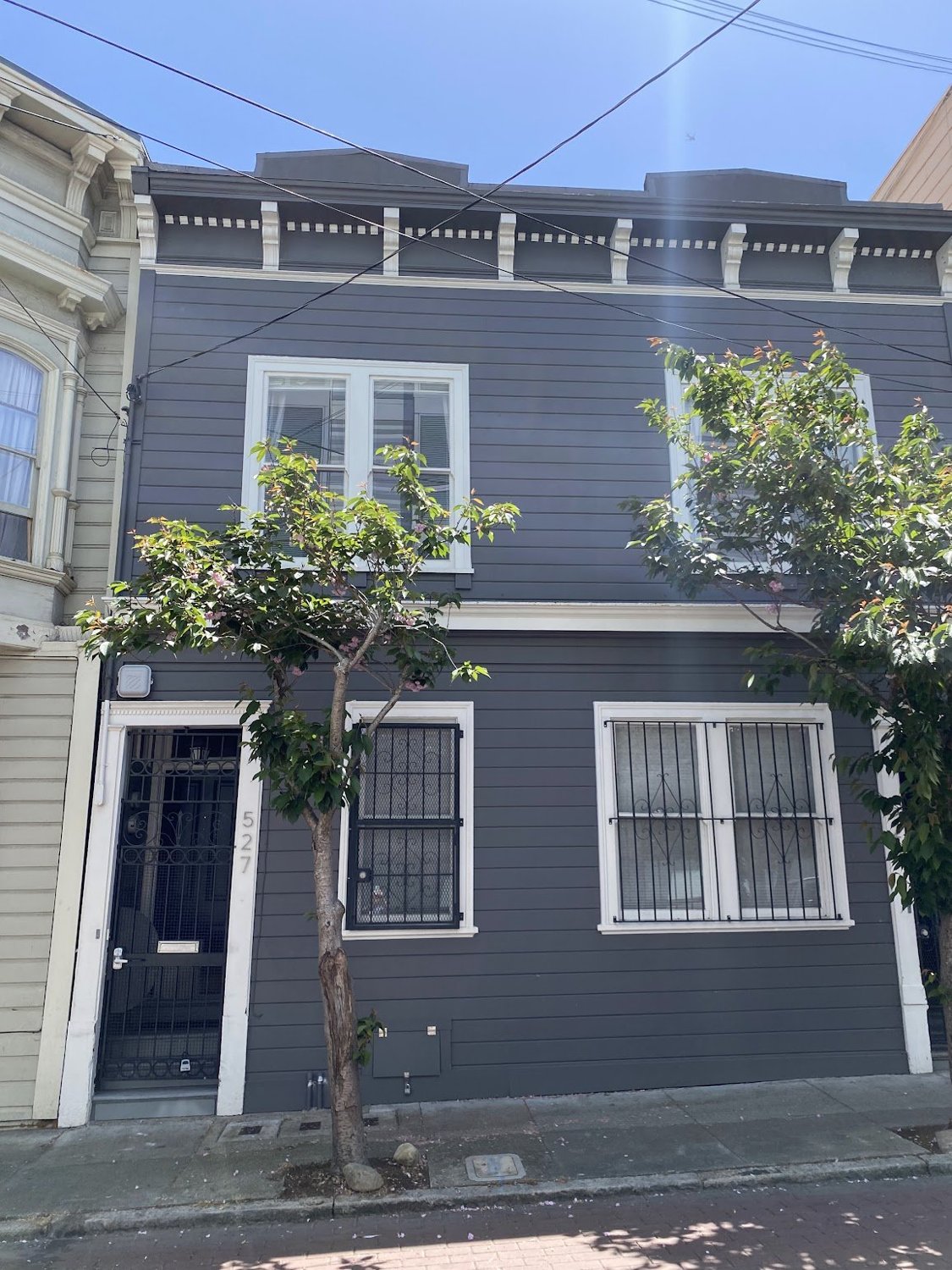
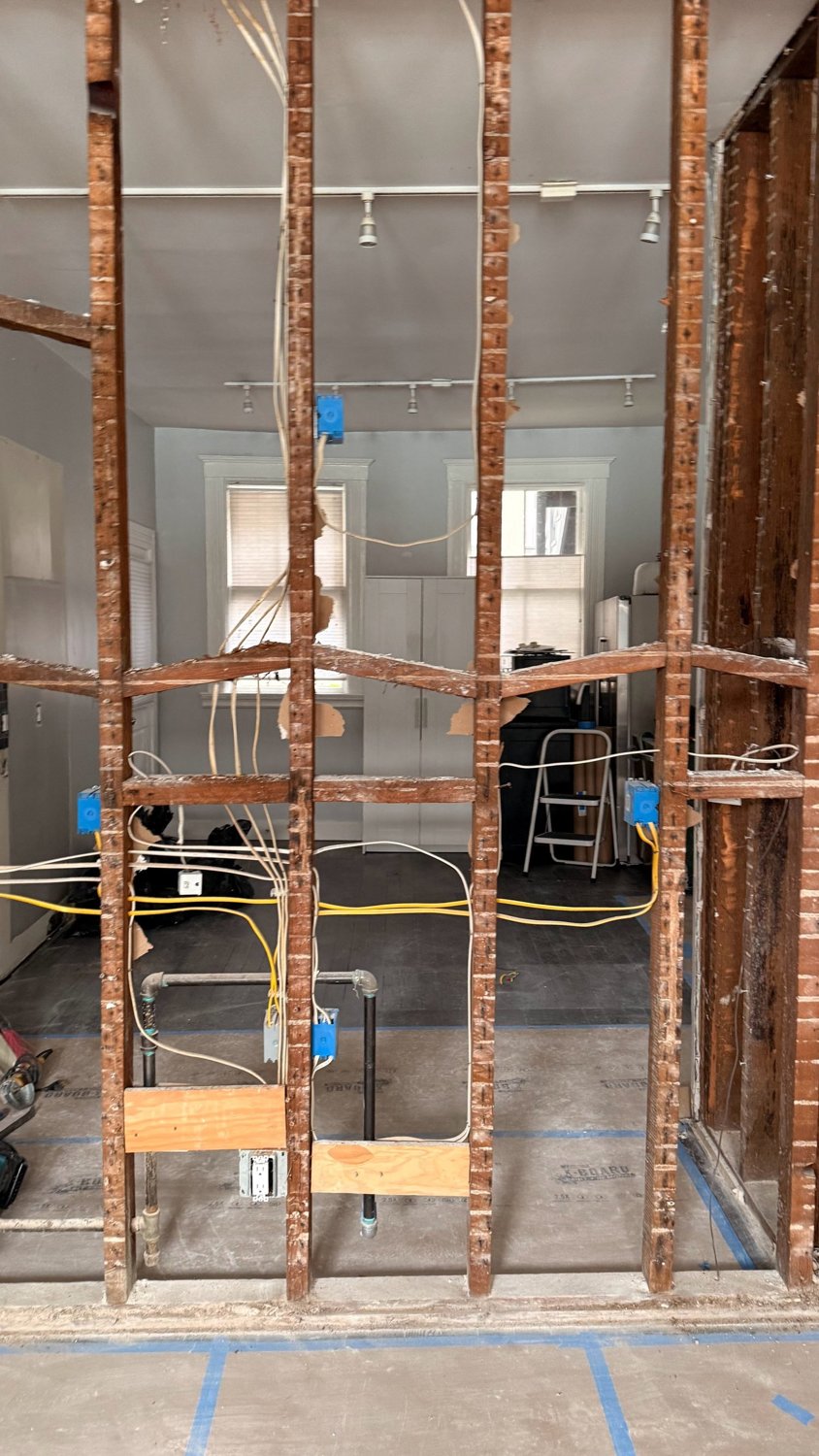
At 527–529 Birch Street, the financing work involved both the sale of one TIC interest and refinancing the retained interest. Redwood required the retained-interest refinance to close concurrently with the other unit’s sale. That made the refinance, sale, and escrow sequence one coordinated plan rather than two independent calendars.
The initial lender checklist requested the TIC agreement, master insurance, an individual HO-6 policy, and an estimated budget. A follow-up clarified that the budget needed to show the dues breakdown for both units. Conditional approval later required an itemized allocation of each co-owner’s share. The lesson is simple: “the dues are about this much” is less useful than a budget the lender can reconcile to the agreement.
| Item in the process | Why it mattered | Practical preparation |
|---|---|---|
| TIC agreement | Defined rights, expenses, and insurance requirements | Provide the complete current agreement and amendments |
| Master and individual insurance | Coverage needed to match the building and ownership arrangement | Connect the insurer and lender early; confirm effective dates |
| Budget for both interests | Underwriting needed each co-owner’s expense allocation | Provide itemized dues and explain what is excluded |
| Appraisal and disclosures | The file had dependencies before the appraisal could be ordered | Confirm receipt, review terms, and track outstanding actions |
| Concurrent sale and refinance | The retained-interest refinance needed to align with the other sale | Use one closing checklist across lender and escrow teams |
| Payoff authorization at resale | Escrow needed lender authorization to order the formal payoff demand | Return authorization early and confirm the demand covers the closing date |
Examples from the Birch Street financing process. Confirm the lender’s current checklist for your borrower and building.
A TIC resale also requires an organized loan-payoff process. Escrow requested signed authorization to obtain a formal payoff demand from Redwood. An online balance or portal payoff request did not replace escrow’s need to obtain the lender’s closing instructions. Build this task into the resale calendar, even when the financing itself is already in place.
Read the financing provisions of the TIC agreement
A lender’s interest extends beyond the floor plan. Article 9 of the Birch agreement addresses liens and mortgage protections. It permits an encumbrance solely against an owner’s interest under specified conditions and prohibits a blanket lien on the entire property. That is a feature of this agreement, not a statement that every TIC agreement has identical restrictions.
The same section calls for institutional financing to be assumable by a reasonably qualified successor under the lender’s underwriting guidelines and for a reasonable fee. Treat that as an item to reconcile with the actual loan documents. Do not advertise an assumable loan or promise an existing rate to a future buyer merely because the co-ownership agreement uses that language. Obtain lender confirmation of the loan-specific rights, qualification requirements, and process.
| Topic | What the Birch agreement illustrates | Question to resolve |
|---|---|---|
| Permitted borrowing | Interest-specific financing and a prohibition on blanket liens (§9.3B) | Does the proposed deed of trust fit the ownership structure? |
| Lender consent | Specified actions, including agreement amendments, require lender consent (§9.3I) | Could a proposed change need approval from more than the owners? |
| Taxes and charges | The association has obligations concerning payments that could create priority liens (§9.3C) | Who collects, verifies, and pays shared obligations on time? |
| Foreclosure protections | The agreement addresses rights of lenders and successors (§9.3D–H) | What happens if one owner defaults on their loan? |
| Conversion to condominiums | Subdivision does not itself change borrower obligations (§9.3O) | What approvals and financing changes would a later conversion require? |
| Loan-document interaction | Specified loan documents can control repayment-related conflicts (§9.3T) | Have counsel and the lender reconciled the final documents? |
Birch Street illustrates why mortgage provisions and amendments should be reviewed together. Terms and enforceability depend on the specific agreement.
Separate loans do not eliminate shared-building risk. Taxes, insurance, roof repairs, water bills, and co-owner governance can still affect everyone. Article 10 of the Birch agreement contains default procedures, including serious remedies. Buyers should understand how overdue common expenses are handled, not only whether another owner’s mortgage is technically separate.
How much cash do you need?
Start with the price of the TIC interest you are buying, rather than multiplying a percentage of the entire building’s price without checking the contract and valuation. On a hypothetical $1 million interest purchase, a 20% down payment is $200,000 and the starting loan balance is $800,000. That arithmetic is not an underwriting decision.
Hypothetical purchases of TIC interests. The 20% assumption matches the public Redwood program benchmark reviewed October 22, 2026 [1]; loan eligibility is not assumed. Closing costs, prepaids, required reserves, and repairs are additional.
- Down payment: confirm the lender’s requirement for the actual property, occupancy, and borrower.
- Closing costs and prepaids: obtain the Loan Estimate and clarify appraisal, title, escrow, insurance, and tax funding.
- Shared operating and maintenance reserves: review the group budget and distinguish those funds from lender-required personal reserves.
- Repair and assessment exposure: check planned work, deferred maintenance, and how special assessments are allocated.
- Cash remaining after closing: model a buffer alongside the lender’s documented reserve requirement.
Compare the full payment and understand an ARM
The mortgage payment is only part of the monthly cost. Add the allocated property taxes, building insurance, individual insurance, dues, utilities, and maintenance that apply. Check the budget carefully so a cost already collected through dues is not counted a second time. Birch’s lender specifically requested the allocation for both units, which is why that reconciliation belongs near the start of underwriting.
If the quoted product is an adjustable-rate mortgage, ask how long the initial rate lasts and how often it can change afterward. For a typical 3/6 ARM, the initial period is three years and subsequent adjustments occur every six months; confirm the note’s exact terms. The reset rate generally uses an index plus a contractual margin, subject to caps and other provisions. Review the initial, later, and lifetime adjustment limits, as well as any rate floor. [3, 4]
Do not rely on being able to refinance before the first adjustment. A future refinance depends on eligibility, income, credit, valuation, the property, and the loans available at that time. Ask the lender to show the payment under its permitted adjustment terms, then test your own budget against that exposure.
Illustrative fully amortizing 30-year loans, each starting at $800,000. Rates are hypothetical, not Redwood quotes. This compares different starting rates; it does not simulate an existing ARM reset, which depends on the remaining balance, term, index, margin, caps, and note. Taxes, insurance, dues, and maintenance are excluded.
Build the closing calendar before agreeing to a date
Our Birch experience makes a useful distinction between a loan being conditionally approved and a transaction being ready to fund. A checklist can still contain budget, insurance, appraisal, documentation, and disclosure items. Confirm which conditions block the next milestone, who is responsible, and how the sale and any related refinance depend on one another.
For covered mortgage transactions, the Closing Disclosure generally must be received at least three business days before consummation. That review period is different from a right to rescind after certain refinances secured by a principal dwelling. Rescission has exceptions and its own timing rules; it is not a general three-day cancellation right for a home purchase. Ask the lender and escrow team to calculate both requirements for each leg of a concurrent transaction. [5, 6]
- Is this a purchase, refinance, or coordinated sale and refinance, and what must close together?
- Has the lender accepted the final TIC agreement and any amendments?
- Are the appraisal, building coverage, individual policy, and dues allocation cleared?
- Have the relevant disclosures been received, and are the applicable waiting periods satisfied?
- What payoff or release instructions must escrow receive before funding and recording?
- After closing, who handles servicing access, autopay, taxes, insurance renewals, and shared-budget administration?
Questions to ask Redwood or another TIC lender
- Will you finance this exact TIC interest and agreement, and what borrower and property conditions apply?
- What are the required down payment, loan limits, reserve balances, and occupancy conditions?
- Which products are available, and what do their APR, fees, adjustment provisions, and rate locks mean for my plans?
- What insurance and budget documents do you require from the TIC group?
- Do the loan documents permit assumption, and how would a qualified buyer apply?
- How do you handle a retained-interest refinance alongside the first TIC sale?
- What must happen before a resale, agreement amendment, or future condominium conversion?
A useful TIC comparison puts the home, agreement, financing, and ongoing budget on the same page. We can help organize those property questions and coordinate with a TIC lender, attorney, and escrow team. Bring the agreement and the proposed loan terms before committing to a closing schedule.
Common questions
Does Redwood Credit Union offer TIC loans?
Yes. Redwood markets a dedicated TIC program. Confirm current down-payment, loan-amount, and eligibility requirements directly with the lender. [1]
Is a TIC loan the same as a condo loan?
No. The underlying ownership and collateral differ. A TIC purchase involves an undivided interest with contractual occupancy rights; a condominium has a legally subdivided ownership interest. A lender must accept the actual TIC structure. [2]
Does an individual TIC loan remove every co-owner risk?
No. Separate mortgage obligations do not remove shared taxes, insurance, maintenance, governance, and default risks. Review the agreement’s expense allocations and remedies with counsel.
Can a buyer assume my existing TIC loan?
Do not assume so without lender confirmation. The Birch agreement includes an assumability condition, but a buyer must establish the rights and qualifications under the actual loan documents and lender process.
Can the sale close while the related refinance is still unfinished?
It depends on the documented structure and escrow conditions. At Birch Street, the lender required the retained-interest refinance to close concurrently with the other unit’s sale. Confirm the arrangement for your own transaction.
Methodology
The payment calculator starts at a $1 million purchase price, 20% down, and a hypothetical 6.50% rate with 30-year amortization. Its price and down-payment sliders and editable annual rate update principal and interest, excluding other housing costs and future ARM adjustments. The down-payment chart calculates price × 20% and price × 80%. Payment scenarios use M = P × r / (1 − (1 + r)^−360), where r is the hypothetical annual interest rate divided by 12 and P is $800,000. No fees, taxes, insurance, dues, or maintenance are included. The scenarios are original calculations, not lender quotes or ARM reset projections. Public program terms can change. The added MLS context is citywide TIC closed sales for January 1–October 22, 2026. It contains no verified borrower financing sample. Year comparisons use different sale mixes and periods. Calculator assumptions are separate from the market data. Building examples reflect our Birch Street experience; individual agreements and lender requirements vary.
Sources
- [1] Redwood Credit Union · TIC Loans ↗
- [2] SirkinLaw APC · Tenancy In Common: An Introduction ↗
- [3] CFPB · Adjustable-rate mortgage index and margin ↗
- [4] CFPB · Adjustable-rate mortgage rate caps ↗
- [5] CFPB · What is a Closing Disclosure? ↗
- [6] CFPB · Regulation Z §1026.23, right of rescission ↗
- [M] TurboHome MLS sales analysis, extracted October 23, 2026; aggregates and methodology ↗
Explore the neighborhoods.
Pair your buying or investment research with local places and neighborhood market data.
- Mission District neighborhood guide ↗Mission District market update ↗
- Bernal Heights neighborhood guide ↗Bernal Heights market update ↗
- Marina District neighborhood guide ↗Marina District market update ↗
- Cow Hollow neighborhood guide ↗Cow Hollow market update ↗
- Potrero Hill neighborhood guide ↗Potrero Hill market update ↗
- Inner Sunset neighborhood guide ↗Inner Sunset market update ↗
- Outer Sunset neighborhood guide ↗Outer Sunset market update ↗
- Outer Richmond neighborhood guide ↗Outer Richmond market update ↗
- Cole Valley neighborhood guide ↗Cole Valley market update ↗
- Glen Park neighborhood guide ↗Glen Park market update ↗
- Castro neighborhood guide ↗Castro market update ↗
- Lower Haight neighborhood guide ↗Lower Haight market update ↗
- Alamo Square neighborhood guide ↗Alamo Square market update ↗
- Lower Pacific Heights neighborhood guide ↗Lower Pacific Heights market update ↗
- Presidio Heights neighborhood guide ↗Presidio Heights market update ↗
- Inner Richmond neighborhood guide ↗Inner Richmond market update ↗
- Nob Hill neighborhood guide ↗Nob Hill market update ↗
- Russian Hill neighborhood guide ↗Russian Hill market update ↗
- Hayes Valley neighborhood guide ↗Hayes Valley market update ↗
- NoPa neighborhood guide ↗NoPa market update ↗