
The short answer
San Francisco plans to combine the Planning Department, Department of Building Inspection and Permit Center into one Department of Planning and Building. The merger could reduce handoffs and conflicting review, but it does not erase zoning, building-code, neighborhood-notice or inspection requirements. Buyers should price projects using today’s documented permit path until the new department publishes measurable results.
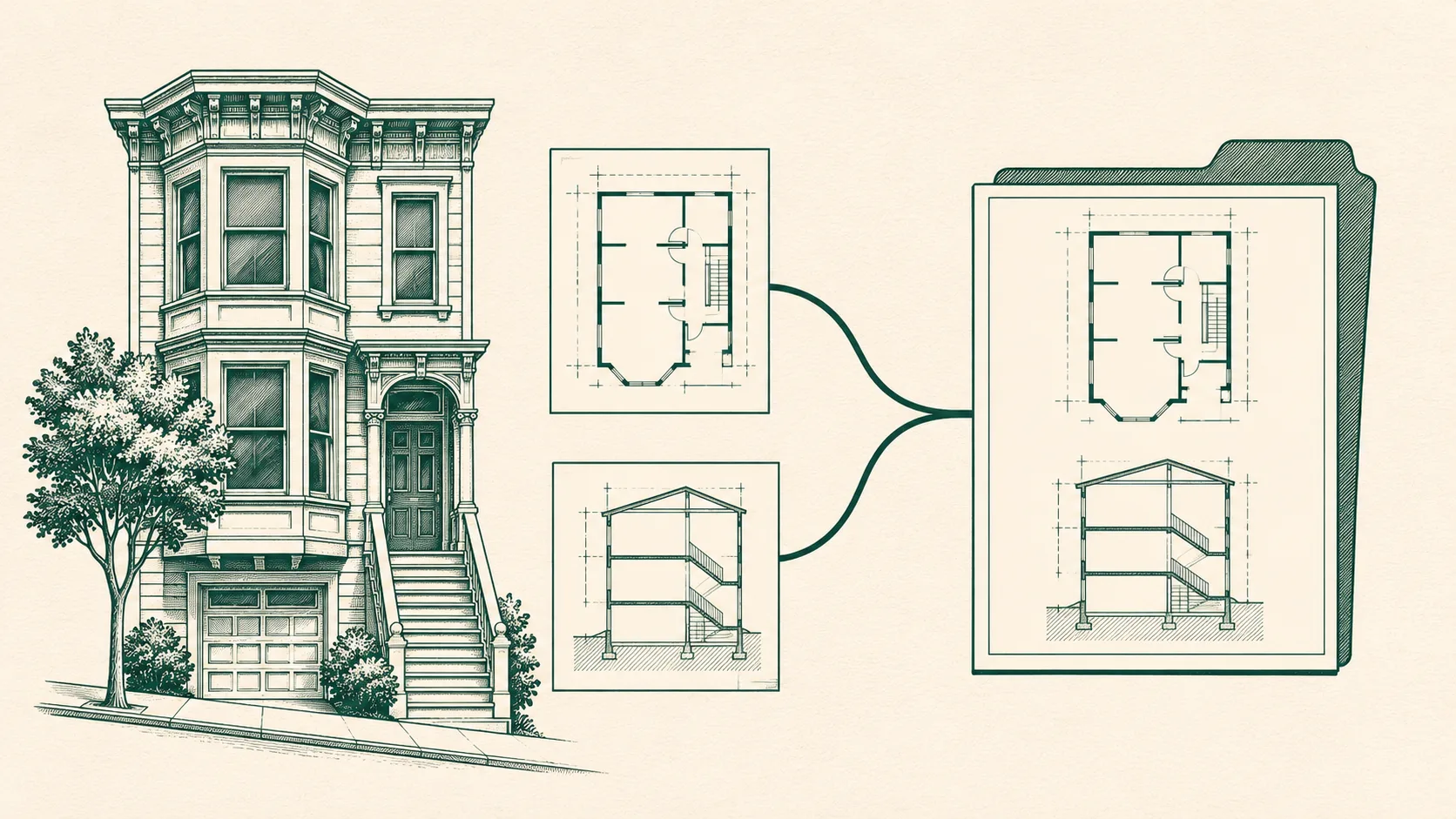
- Merger announced
- Nov. 18, 2026
- PermitSF Phase 1
- 2,800+ permits
- Current review targets
- 21 / 30 / 14 days
Implementation still requires the City process
Issued through the portal in its first five months [3]
Completeness, first review and resubmission targets [4]
Data: City permitting guidance and merger reporting checked November 19, 2026. PermitSF Phase 1 results cover the first five months after its February 2026 launch.
| Question | November 2026 answer |
|---|---|
| Are Planning and DBI already one department? | No. The City announced the consolidation on November 18. The formal implementation process is still ahead. |
| Can I submit every residential project through PermitSF? | No. The portal covers a growing list of permit types, including several in-kind and no-plan scopes. More complex projects still follow the applicable Planning and DBI process. |
| Does the merger make a project legal or buildable? | No. Zoning, historic review, unit protections, building and fire codes, inspections and project-specific approvals still apply. |
| Should I shorten my acquisition schedule now? | No. Use the current documented path and treat future improvement as upside. |
The announcement describes an organizational change, not blanket permit approval or a new project-specific entitlement.
Why combining Planning and Building could matter
A San Francisco renovation can move through two different questions. Planning asks whether the proposed use and design fit the Planning Code. DBI and other reviewing agencies ask whether the plans satisfy building, fire, accessibility and related safety rules. Those questions should remain distinct, but the handoff between them does not need to be.
On November 18, the City announced a new Department of Planning and Building that would combine Planning, DBI and the Permit Center. Sarah Dennis Phillips is expected to lead it, with David Kane serving as Building Official. The stated goal is one accountable process from application through final inspection. The Planning Commission had already described shared technology, administration and policy work after voters approved Proposition F. [1, 2]
My view is that coordination matters more than the org chart. A single department is useful if one complete submission produces early, coordinated comments. It is not useful if the same reviews simply sit under a new name.
| Decision | What it answers | What the merger should improve |
|---|---|---|
| Planning approval | Is the proposed use, massing and design allowed? | Earlier identification of zoning and design conflicts |
| Building plan review | Do the plans meet applicable construction and life-safety codes? | Coordinated comments and fewer duplicate handoffs |
| Other agency review | Does the scope need Fire, Public Works, Public Health, PUC or other review? | Clear routing and parallel review where allowed |
| Inspections and closeout | Was the approved work completed and inspected? | A more legible path from issuance through final sign-off |
What PermitSF has already changed
PermitSF began rolling out digital permits in February 2026. The current portal dataset covers defined permit types rather than every construction project. Its list includes doors, siding and windows; reroofing without plans; no-plan electrical, plumbing and mechanical work; and in-kind nonstructural kitchen or bath remodeling, among other scopes. The dataset updates four times a day. [3, 5]
| Measure | Published result | Period or definition |
|---|---|---|
| Permits issued | More than 2,800 | First five months of the portal |
| Inspections completed | More than 2,100 | First five months of the portal |
| Fire counter wait | 32 to 14 minutes | Average wait, a 56% reduction |
| Applications filed after hours | 27% | Share submitted outside weekday business hours |
| Door, siding and window submissions | Up 72% | February–July 2026 versus the same 2025 period |
| Fire alarm and sprinkler submissions | Up 42% | February–July 2026 versus the same 2025 period |
Published by PermitSF for Phase 1. Higher submission volume is evidence of use, not proof that every project was approved faster. [3]
Those numbers support the basic idea: simple work benefits when the application is online and the route is clear. They do not yet tell us what happens to a rear addition, unit legalization, major structural remodel or multifamily value-add plan. Those are the projects where coordinated review could create the most value and where buyers should be most careful about assuming it.
The City has targets. Measure the merger against them
The current performance framework targets a completeness letter within 21 calendar days, first plan-review comments within 30 days and resubmission review within 14 days for the applicable tracked permits. The City publishes separate issuance and review datasets so applicants can see the time from filing to issuance and the time spent at individual review stations. [4, 6, 7]
The useful test is not whether one easy permit clears in two days. It is whether the median project receives coordinated comments on time, revisions stop bouncing between departments and the total filing-to-issuance period falls for the scopes buyers actually want to build.
How I would underwrite a renovation during the transition
- Define the scope before valuing the upside. Separate in-kind work, structural changes, additions, new apartments and changes of use.
- Start with the property record. Reconcile the 3R, Planning record, building permits, trade permits, complaints, approved plans and the actual layout.
- Ask which approvals are sequential and which can run in parallel. Put each expected review station in the schedule.
- Use today’s published process and realistic professional estimates for the base case. Do not shorten the schedule because the departments are merging.
- Carry a delay case. Add financing, taxes, insurance, utilities and lost rent for the extra months.
- Price future process improvement as upside only after the City publishes results for a comparable permit type.
For development capacity, use the Family Zoning acquisition guide. For existing spaces that do not match the records, use the unpermitted-work seller guide as a document framework. Small-building buyers should also separate the permit plan from the operating case in the investment-property underwriting guide.
What to request before removing contingencies
- Current 3R and the address-level DBI permit and complaint history
- Planning applications, zoning information and any neighborhood-notice record
- Approved plans, job cards, inspection history and final completion documents for prior work
- Electrical, plumbing, mechanical and fire records that may not appear in the same place
- A written preliminary scope from the architect or contractor, including the expected permit route
- A project budget with design, engineering, fees, construction, contingency and carrying costs separated
What happens next
The November 18 announcement is the start of the formal consolidation, not its finish. Reporting on the City’s plan says the merger would take effect 60 days after the mayor introduces the required legislation unless the Board of Supervisors disapproves it. Until the legislation is filed and the City publishes transition instructions, continue using the current Planning, DBI and PermitSF guidance. [1, 2]
I would not delay a sound project solely to wait for the new department. I also would not use the merger to rescue a deal that only works with a heroic approval schedule. Buy the property for the path you can document now. Let a better permit system improve the result later.
Common questions
Are SF Planning and DBI already merged?
No. The City announced the consolidated Department of Planning and Building on November 18, 2026, but the formal implementation process and transition instructions are still ahead.
Will the merger make San Francisco permits faster?
It could reduce handoffs and conflicting review, but the useful proof will be published filing-to-issuance times and on-time review rates for comparable permit types.
Does PermitSF handle a major home renovation?
Do not assume it does. PermitSF covers a growing list of defined digital permit types. Confirm the route for the actual scope before setting the project schedule.
Should I pay more for a fixer because permitting may improve?
No. Underwrite the property using the current documented process, costs and carrying time. Treat future speed as upside, not the base case.
Methodology
This guide separates the November 18 organizational announcement from the current permit process. PermitSF figures are the City’s published Phase 1 results and apply to the portal scopes and periods stated, not all San Francisco permits. The article does not forecast a new approval time. Its recommendation is to use current records, routing and carrying costs until comparable post-merger performance data is available.
Sources
- SF Planning Commission · Director’s announcement after Proposition F, November 5, 2026 ↗
- Mission Local · Mayor announces Planning and DBI merger, November 18, 2026 ↗
- PermitSF · Phase 1 results, August 19, 2026 ↗
- PermitSF · Building-permit performance measures and targets, February 18, 2026 ↗
- DataSF · PermitSF Permitting Data, checked November 19, 2026 ↗
- DataSF · Building Permit Application Issuance Metrics, checked November 19, 2026 ↗
- DataSF · Building Permit Application Review Metrics, checked November 19, 2026 ↗
- SF Planning · Planning Approval process, checked November 19, 2026 ↗
- SF.gov · Permit application timelines, expiration and extensions, checked November 19, 2026 ↗